Unlimited Psychometric Test for Perfection

Menu Navigation
Start your preparation today 🚀
Unlimited practice with expert-designed psychometric tests.
Get StartedPrepare for RRB ALP CBAT 2026 with detailed aptitude test guidance, memory improvement techniques, concentration practice, perceptual speed training and psycho test preparation strategies.
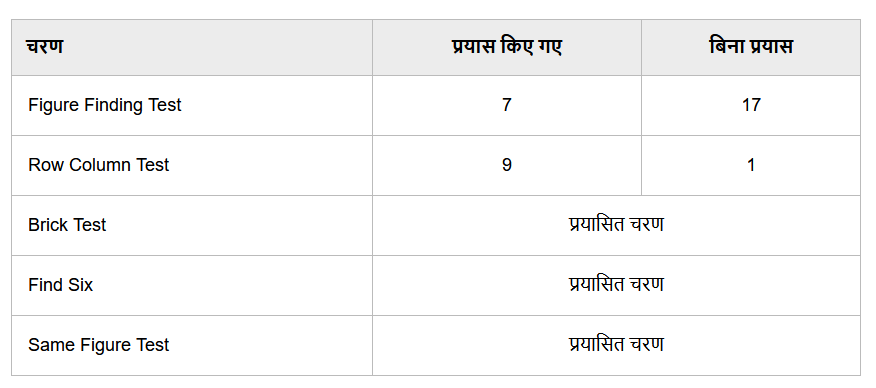
RRB ALP CBAT is one of the most important stages of Assistant Loco Pilot recruitment. Candidates who successfully qualify CBT 1 and CBT 2 become eligible for the aptitude test stage. The objective of this examination is to evaluate mental alertness, observation skills, concentration ability and decision-making capacity required for railway operations. :contentReference[oaicite:1]{index=1}
Unlike traditional competitive examinations, the psycho test does not focus on theory-based questions. Instead, candidates are evaluated through multiple aptitude batteries that assess memory, reaction speed, attention span and visual judgment abilities. :contentReference[oaicite:2]{index=2}
The aptitude test generally contains five major sections including Memory Test, Following Direction Test, Depth Perception Test, Concentration Test and Perceptual Speed Test. Regular practice is essential because the pattern differs significantly from CBT examinations. :contentReference[oaicite:3]{index=3}
This detailed guide explains the complete CBAT structure, aptitude batteries, preparation strategy, common mistakes and performance improvement techniques for railway aspirants.
The Computer Based Aptitude Test (CBAT) is conducted after CBT 2 for Assistant Loco Pilot candidates. Unlike traditional examinations, the CBAT evaluates cognitive abilities required for railway safety operations. The examination focuses on memory, concentration, observation skills, perceptual speed and the ability to follow directions. :contentReference[oaicite:0]{index=0}
Candidates must qualify in every aptitude battery separately. The test is designed specifically for safety category posts where quick decisions and high levels of attention are essential. :contentReference[oaicite:1]{index=1}
| Feature | Details |
|---|---|
| Exam Stage | After CBT 2 |
| Mode | Computer Based |
| Language | Hindi & English |
| Negative Marking | No |
| Major Batteries | 5 Aptitude Tests |
The Computer Based Aptitude Test includes multiple aptitude batteries designed to evaluate observation, concentration, depth perception and decision-making skills. Candidates should practice different test formats regularly to improve speed and accuracy.
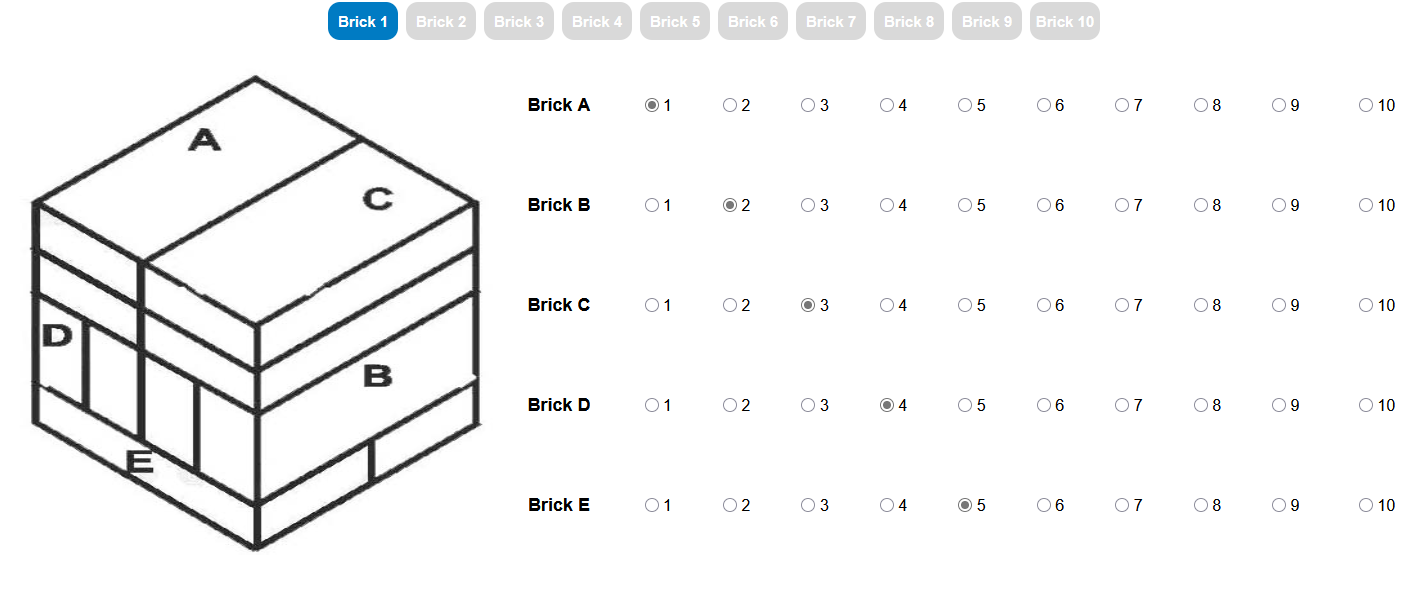
Brick Test evaluates spatial visualization and depth perception abilities. Candidates must determine how many blocks are touching the marked brick.
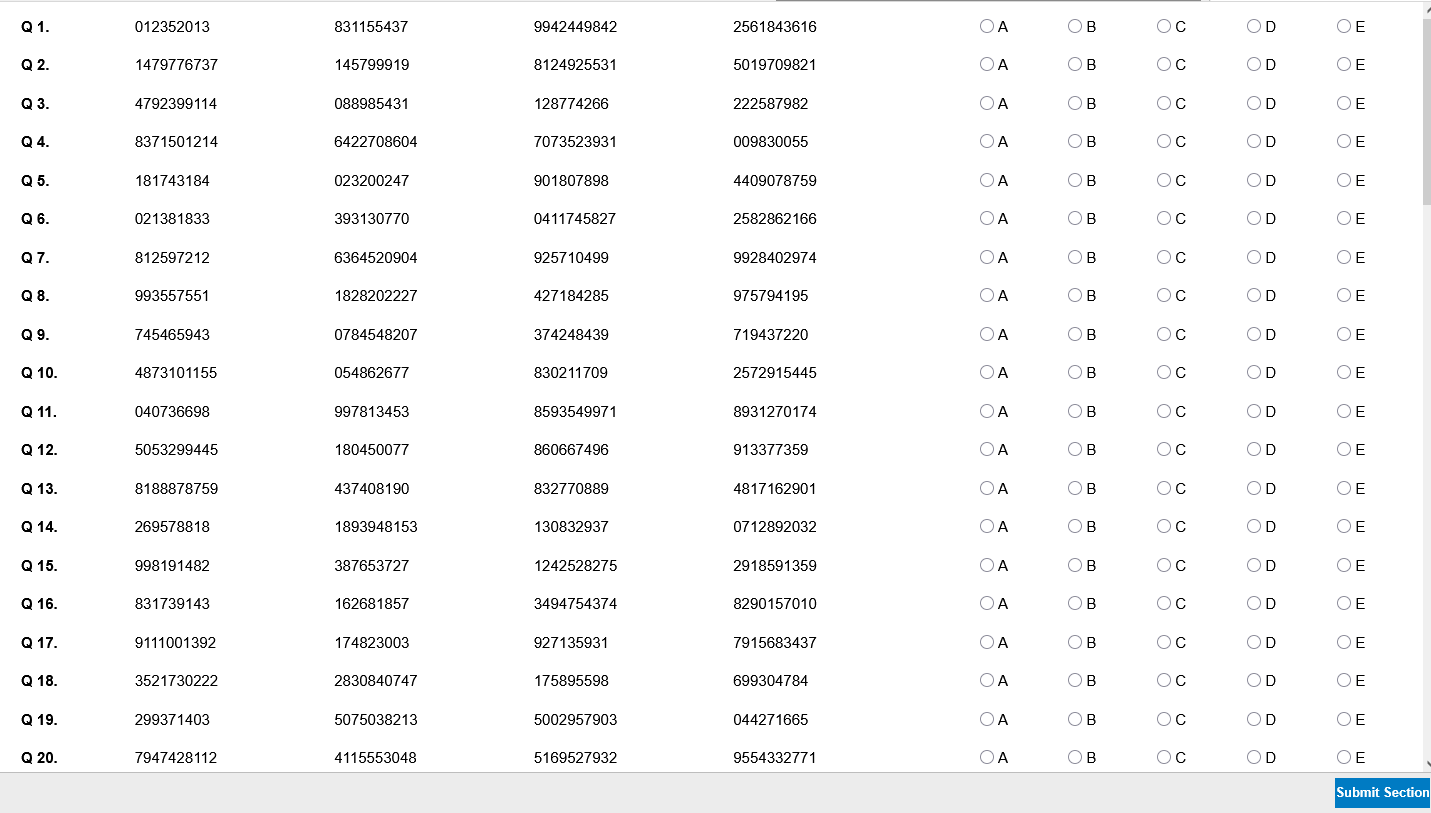
Advanced brick arrangement questions help candidates improve observation skills and three-dimensional visualization ability.
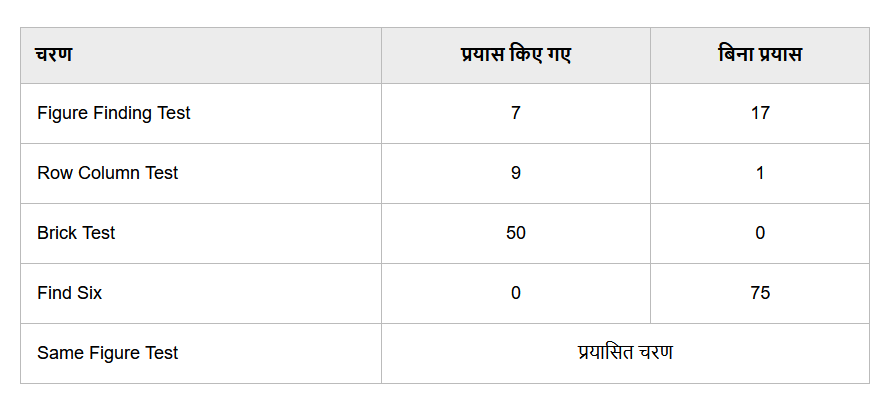
Regular practice with brick test patterns can improve accuracy and confidence during the actual aptitude examination.
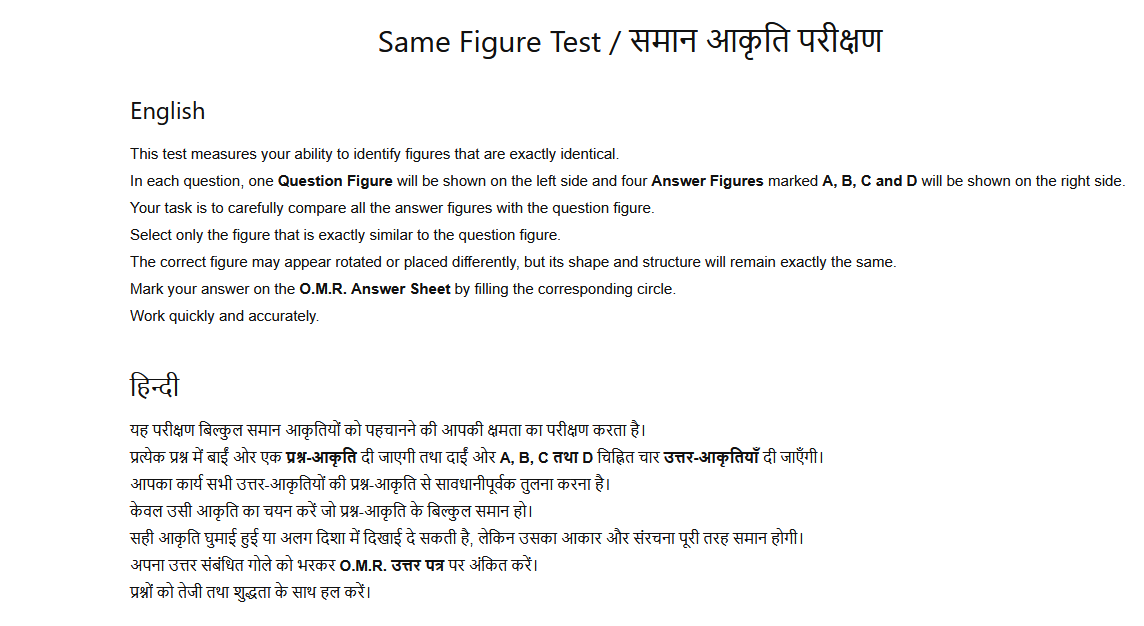
Find Six Test measures concentration, visual scanning speed and pattern recognition abilities. Candidates must identify valid number combinations quickly and accurately.
Unlike CBT examinations, the CBAT aptitude test focuses on practical cognitive abilities rather than theoretical knowledge. Candidates who regularly practice Brick Test, Find Six Test, Memory Test and Perceptual Speed Test generally perform better during the actual examination.
Candidates are required to achieve the minimum qualifying standard in each aptitude battery. Performing exceptionally well in one battery cannot compensate for poor performance in another battery because every section is evaluated separately. :contentReference[oaicite:2]{index=2}
The Assistant Loco Pilot aptitude test consists of five major batteries that assess different cognitive abilities required for railway operations. These batteries evaluate memory, direction following, depth perception, concentration and perceptual speed. :contentReference[oaicite:3]{index=3}
The Memory Test evaluates a candidate's ability to observe information, retain it for a short duration and accurately recall it later. Candidates may be shown maps, symbols, picture-number combinations or object locations and then asked questions based on what they observed. :contentReference[oaicite:4]{index=4}
Strong memory skills are important for Assistant Loco Pilots because railway operations require continuous observation and recall of signals, instructions and operational information.
The Following Directions Test measures how accurately a candidate understands and executes instructions. Candidates are presented with a set of directions, symbols or movement rules and must determine the correct outcome. This battery assesses instruction-following ability and decision-making under pressure. :contentReference[oaicite:5]{index=5}
For railway operations, the ability to follow instructions precisely is extremely important because operational safety often depends on correct interpretation of signals and directions.
The Depth Perception Test evaluates a candidate's ability to judge distance, position and spatial relationships between objects. Assistant Loco Pilots frequently observe signals, tracks and railway infrastructure from varying distances, making depth perception an important operational skill.
In this test, candidates may be shown visual patterns, objects or moving elements and asked to identify relative positions. Quick and accurate judgment is essential for scoring well.
The Concentration Test checks a candidate's ability to remain focused while handling repetitive information. Railway operations demand continuous attention and alertness, which makes concentration one of the most important abilities for Assistant Loco Pilots.
Candidates are generally required to identify symbols, numbers, patterns or matching elements accurately within a limited time. The test rewards both speed and consistency.
The Perceptual Speed Test measures how quickly candidates can identify similarities, differences and visual patterns. This battery evaluates recognition speed and processing efficiency under time pressure.
Candidates may need to compare symbols, numbers, codes or figures and identify matching pairs in the shortest possible time. Fast visual processing improves performance significantly.
Identify matching symbols quickly.
Compare figures and identify differences.
Improve reaction time and decision accuracy.
Many candidates perform well in CBT 1 and CBT 2 but struggle in the aptitude test because they underestimate its importance. Understanding common mistakes can improve overall performance.
Improvement in CBAT performance comes through regular aptitude practice rather than memorization. Candidates should dedicate time daily to memory exercises, observation drills and concentration-building activities.
Solving aptitude mock tests under timed conditions helps candidates become familiar with the pressure of the actual examination. Consistent practice improves reaction speed, confidence and overall performance.
Candidates who focus on accuracy, concentration and visual recognition exercises generally perform better in aptitude batteries than those who rely only on theoretical preparation.
A structured preparation plan can significantly improve performance in the aptitude test. Since CBAT focuses on observation, memory, concentration and perceptual abilities, candidates should practice regularly rather than studying theory.
| Week | Preparation Focus |
|---|---|
| Week 1 | Memory Test & Observation Practice |
| Week 2 | Following Direction & Concentration Tests |
| Week 3 | Depth Perception & Perceptual Speed |
| Week 4 | Full Mock Tests & Performance Analysis |
The Assistant Loco Pilot role requires continuous alertness and accurate decision-making. Railway operations involve handling signals, monitoring track conditions and responding quickly to changing situations. CBAT is designed to evaluate these essential abilities.
Candidates who clear CBT 1 and CBT 2 but fail to perform adequately in CBAT may face difficulties in the final selection process. Therefore, aptitude preparation should receive the same importance as technical and academic preparation.
Tests mental awareness and responsiveness.
Measures ability to maintain focus.
Evaluates visual recognition capability.
Checks response accuracy under pressure.
CBAT is the Computer Based Aptitude Test conducted for Assistant Loco Pilot candidates after CBT 2.
CBAT is different from traditional exams because it focuses on aptitude, observation and concentration rather than theory.
Generally, aptitude tests do not include negative marking, but candidates should always verify official instructions.
CBAT commonly includes Memory, Following Directions, Depth Perception, Concentration and Perceptual Speed tests.
Yes, with consistent daily practice and mock tests, one month can be sufficient for focused preparation.
No, CBAT is specifically associated with Assistant Loco Pilot recruitment.
Concentration, observation and decision-making are among the most important skills evaluated.
Regular visual memory exercises and aptitude practice can improve recall ability.
Yes, aptitude test performance is an important factor in Assistant Loco Pilot selection.
Yes, mock tests help candidates become familiar with aptitude battery patterns and improve speed.
RRB ALP CBAT is a unique aptitude assessment designed to evaluate the mental abilities required for safe railway operations. Unlike CBT examinations, this stage focuses on memory, observation, concentration and decision-making skills.
Candidates who practice regularly, attempt aptitude mock tests and improve visual recognition abilities can significantly increase their chances of success. Consistency is the key factor in CBAT preparation.
Understanding the structure of each aptitude battery and following a systematic preparation plan can help candidates approach the examination with confidence.
Stay focused, practice daily and continue improving your aptitude skills to move one step closer to becoming an Assistant Loco Pilot in Indian Railways.